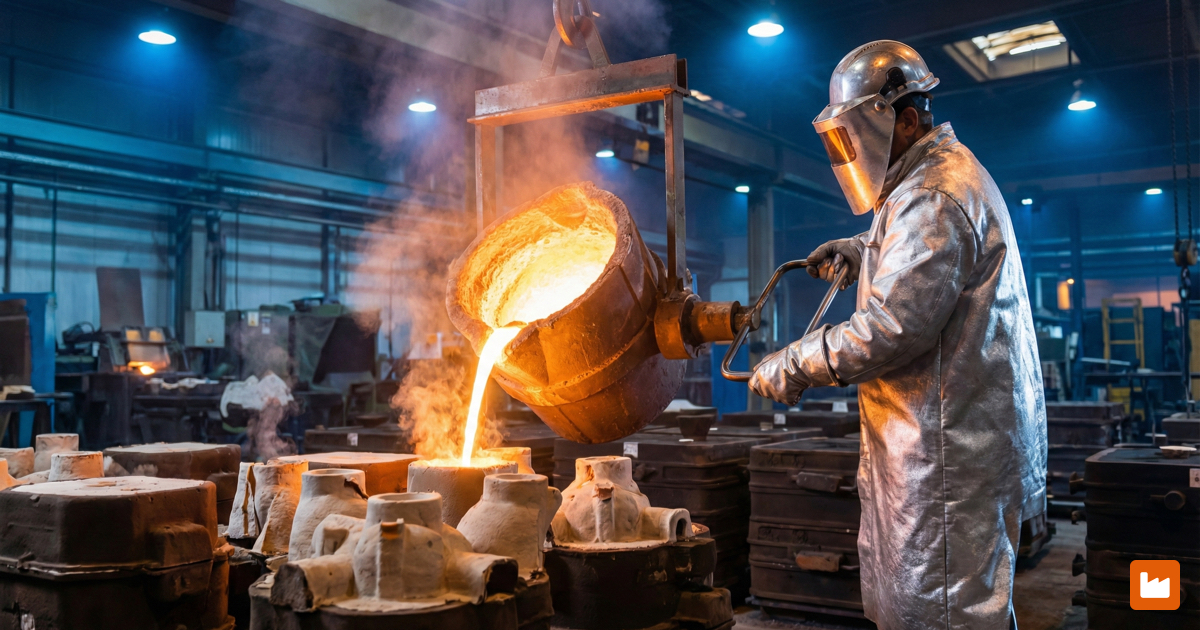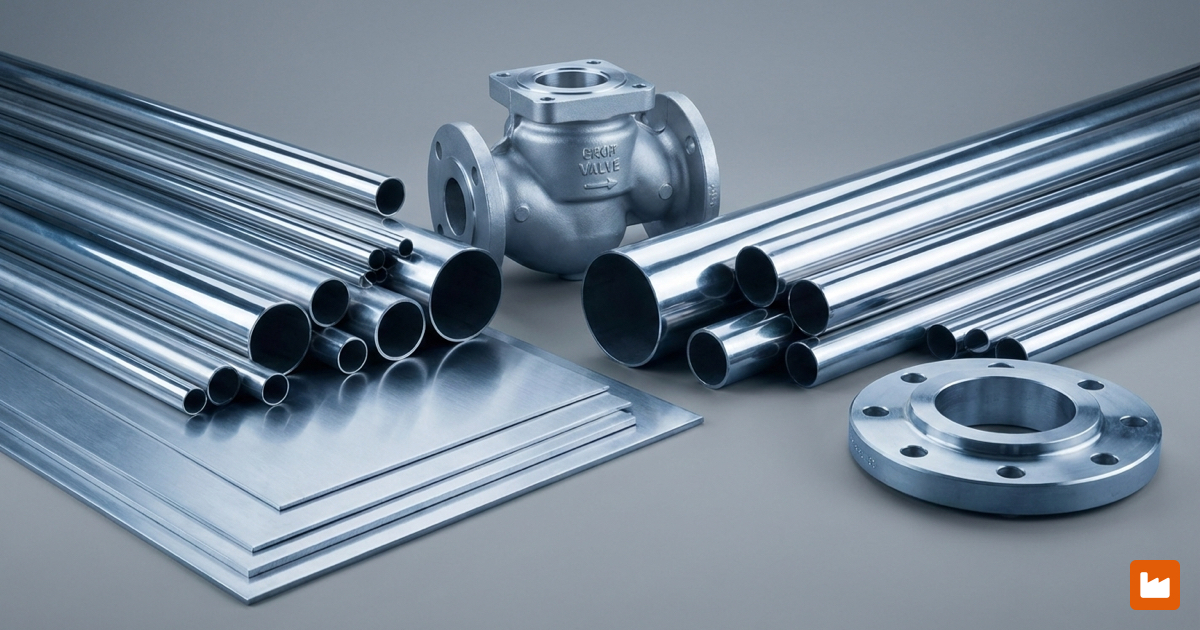
Selecting the right stainless steel grade for your casting or forging application requires balancing corrosion resistance, mechanical properties, fabrication requirements, and cost. This guide covers the major stainless steel families, their properties, and typical applications to help you make informed material decisions.
What Makes Steel "Stainless"?
Stainless steel contains a minimum of 10.5% chromium, which forms a thin, invisible passive oxide layer on the surface that prevents further corrosion. This self-healing layer distinguishes stainless steel from carbon and alloy steels that require protective coatings or treatments.
Additional alloying elements—nickel, molybdenum, nitrogen, titanium—enhance specific properties, creating the diverse family of stainless grades available today.
Stainless Steel Families
Austenitic Stainless Steels
The most widely used family, characterized by excellent corrosion resistance, formability, and weldability. Named for their face-centered cubic (austenitic) crystal structure, stabilized by nickel additions. Non-magnetic in annealed condition.
Key characteristics:
- Best overall corrosion resistance
- Excellent formability and weldability
- Non-magnetic (annealed condition)
- Cannot be hardened by heat treatment
- Highest cost due to nickel content
Ferritic Stainless Steels
Chromium-based grades without significant nickel. Body-centered cubic structure, similar to carbon steel. Magnetic and cannot be hardened by heat treatment. Lower cost than austenitic grades.
Key characteristics:
- Good corrosion resistance (less than austenitic)
- Magnetic
- Good stress corrosion cracking resistance
- Limited formability compared to austenitic
- Lower cost (no nickel)
Martensitic Stainless Steels
Hardened by heat treatment, offering high strength and moderate corrosion resistance. Used where wear resistance and edge retention are required.
Key characteristics:
- Can be hardened to 45-60 HRC
- Highest strength among stainless families
- Moderate corrosion resistance
- Magnetic
- Used for cutlery, surgical instruments, bearings
Duplex Stainless Steels
Mixed austenitic-ferritic microstructure combining benefits of both. Approximately twice the yield strength of austenitic grades with excellent corrosion resistance, particularly against chloride stress corrosion cracking.
Key characteristics:
- High strength (2x austenitic)
- Excellent chloride resistance
- Good weldability with proper procedures
- Used in chemical, petrochemical, marine applications
Precipitation Hardening (PH) Stainless Steels
Achieve high strength through precipitation hardening heat treatment while maintaining corrosion resistance. Aerospace and high-performance applications.
Common Grades: Properties and Applications
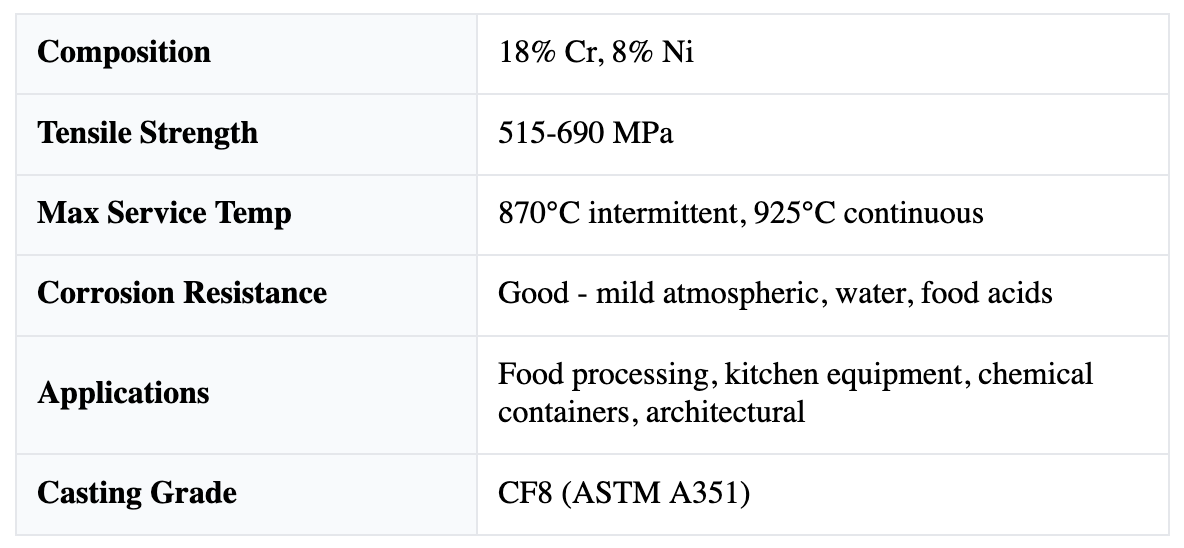
304 / CF8 (1.4301 / A351)
The "workhorse" austenitic grade, accounting for over 50% of stainless steel production.
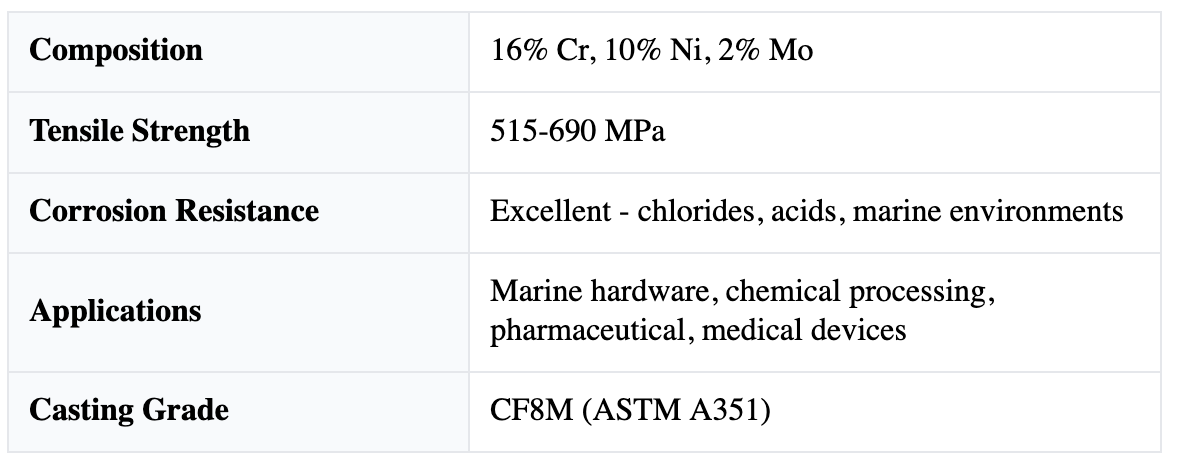
316 / CF8M (1.4401 / A351)
Molybdenum-enhanced version of 304 with superior corrosion resistance, especially in chloride environments.
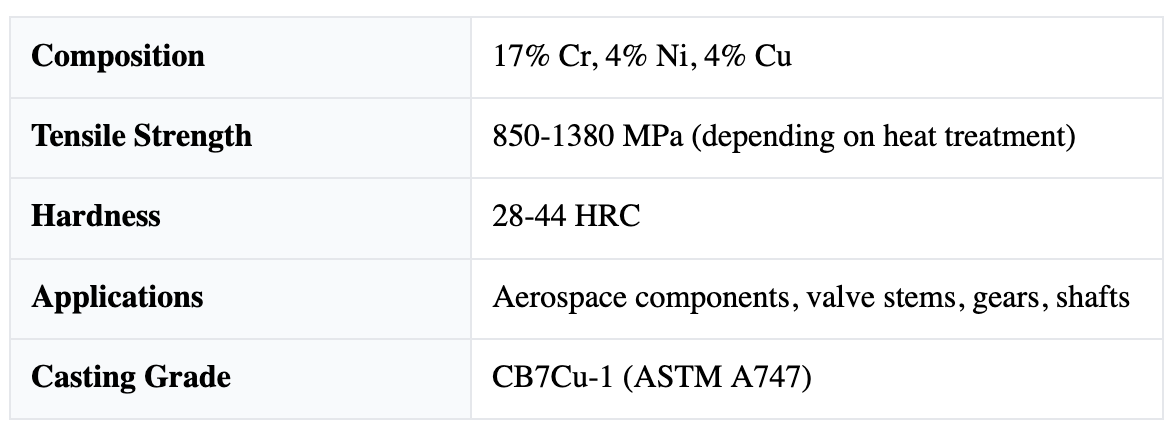
17-4 PH (ASTM A564 Type 630)
Precipitation hardening grade achieving high strength with good corrosion resistance.
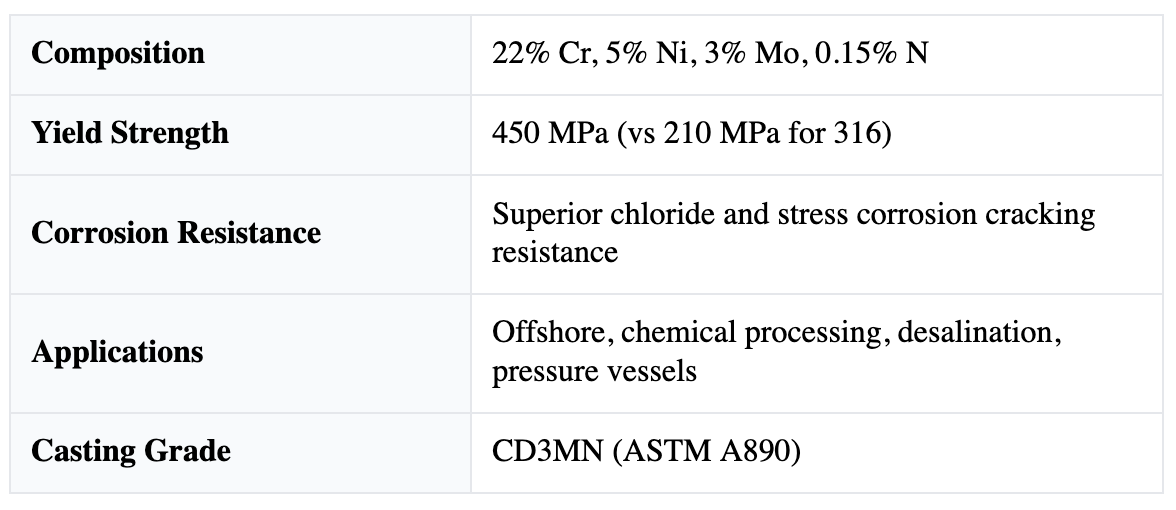
Duplex 2205 (1.4462 / UNS S31803)
Standard duplex grade with twice the yield strength of 316 and excellent chloride resistance.
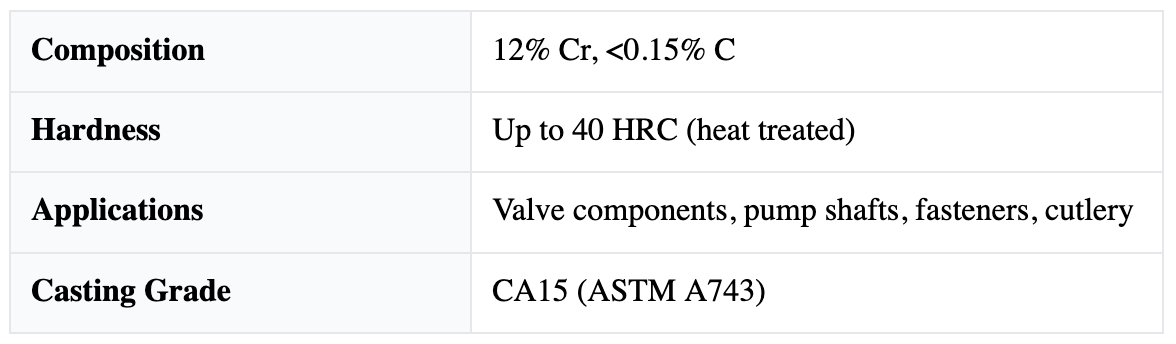
410 / CA15 (1.4006)
Basic martensitic grade offering hardness, strength, and moderate corrosion resistance.
Grade Selection Criteria
Corrosion Environment
- Mild (atmospheric, water): 304/CF8
- Chlorides (coastal, seawater): 316/CF8M or Duplex
- Strong acids: Higher alloys (904L, Hastelloy)
- High temperature oxidation: 309, 310
Mechanical Requirements
- Standard strength, max formability: 304, 316
- High strength: Duplex or 17-4 PH
- Wear resistance: Martensitic (410, 420, 440C)
Temperature
- Cryogenic: 304L, 316L (down to -196°C)
- High temperature: 309, 310, 321 (to 1150°C)
- Avoid 300 series at 425-870°C (sensitization range)
Cost Considerations
Material cost increases with alloy content. Approximate cost ranking (lowest to highest):
- 410 (ferritic/martensitic)
- 430 (ferritic)
- 304 (austenitic)
- 316 (austenitic + Mo)
- Duplex 2205
- 17-4 PH
- Super Duplex / Super Austenitic
Casting vs Forging Considerations
Stainless Steel Castings
- Complex geometries possible
- Wider grade availability (CF3, CF8, CF8M, CF3M, etc.)
- Investment casting achieves excellent surface finish
- Lower mechanical properties than forgings (porosity, inclusions)
- Better for pressure-containing valve bodies, pump housings
Stainless Steel Forgings
- Superior mechanical properties (refined grain structure)
- Higher fatigue and impact strength
- Better for highly stressed components (shafts, flanges)
- Limited geometry complexity
- Higher cost for complex shapes
Sourcing Stainless Steel Components from India
India produces over 7 million tonnes of stainless steel annually, with established foundries and forges serving global markets. Benefits include:
- Full grade availability: All common austenitic, duplex, and PH grades
- International standards: ASTM, EN, JIS compliance
- Material certification: EN 10204 3.1/3.2 certificates
- Cost advantage: 25-40% savings versus Western sources
- Testing capabilities: Chemical analysis, mechanical testing, NDT
Conclusion
Selecting the right stainless steel grade balances corrosion resistance, mechanical properties, fabricability, and cost. Understanding the characteristics of each family—austenitic, ferritic, martensitic, duplex, and PH—enables optimal material selection for your specific application requirements.
Need help selecting the right stainless steel grade for your casting or forging? Contact our materials experts or submit your specifications for a quote.