Investment Casting Process: A Complete Guide for Industrial Buyers
Learn how investment casting produces precision metal components with superior surface finish and tight tolerances for aerospace, medical, and industrial applications.
Investment casting, also known as lost wax casting, is one of the oldest and most precise metal forming techniques used today. This process produces components with exceptional dimensional accuracy, superior surface finish, and complex geometries that would be impossible or cost-prohibitive with other manufacturing methods.
What is Investment Casting?
Investment casting is a manufacturing process where a wax pattern is coated with a refractory ceramic material. Once the ceramic shell hardens, the wax is melted out, leaving a hollow mold. Molten metal is then poured into this mold to create the final component.
The term "investment" refers to the ceramic material that "invests" or surrounds the wax pattern. This ancient technique dates back over 5,000 years but has been refined with modern technology to produce aerospace-grade components with tolerances as tight as ±0.1mm.
The Investment Casting Process: Step by Step
1. Pattern Creation
A wax pattern is created using injection molding or 3D printing. This pattern is an exact replica of the final part, including allowances for metal shrinkage. Multiple wax patterns are often attached to a central wax sprue, forming a "tree" that allows multiple parts to be cast simultaneously.
2. Shell Building (Investment)
The wax assembly is dipped into ceramic slurry and coated with fine refractory sand. This process is repeated 6-10 times, with drying between each coat, to build a shell typically 5-15mm thick. The shell must be strong enough to withstand the thermal shock of molten metal.
3. Dewaxing
The ceramic shell is heated in an autoclave or flash-fire furnace. The wax melts and drains out, leaving a perfect negative impression of the desired part. This step must be carefully controlled to prevent shell cracking.
4. Preheating and Casting
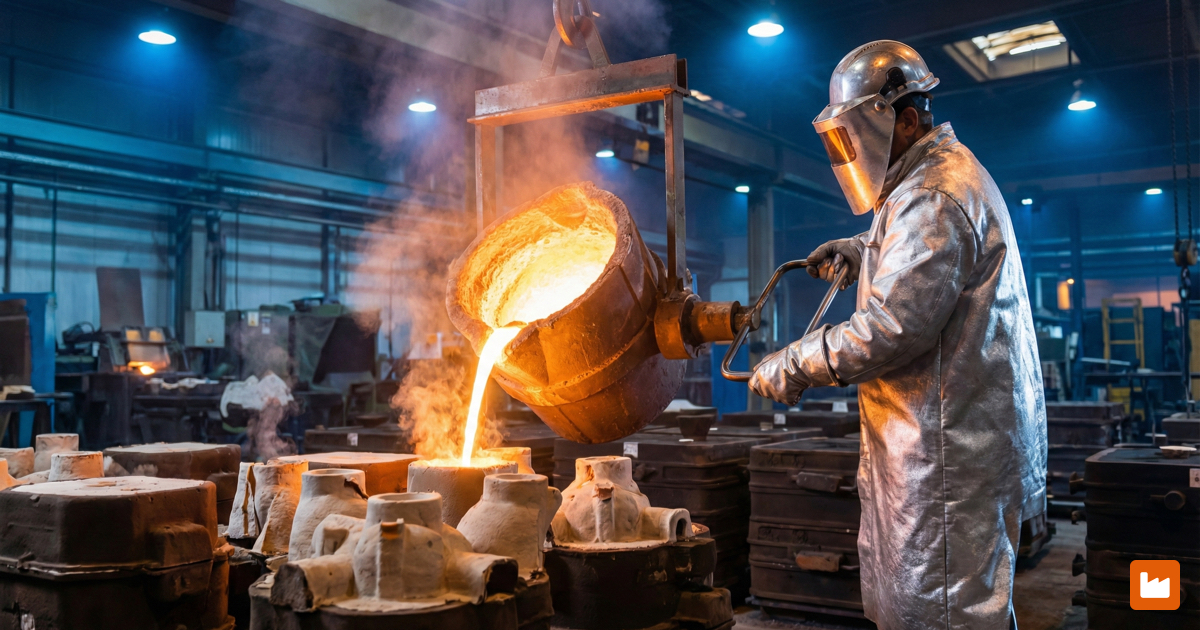
The empty shell is preheated to 1000-1100°C to remove moisture, burn out any remaining wax residue, and prepare for casting. Molten metal is poured into the hot shell, either by gravity, vacuum, or centrifugal force depending on the application.
5. Shell Removal and Finishing
After cooling, the ceramic shell is broken away mechanically or with water jets. Individual castings are cut from the tree, and gates/risers are removed. Final finishing may include heat treatment, machining, surface treatment, and inspection.
Materials Suitable for Investment Casting
Investment casting accommodates a wide range of ferrous and non-ferrous alloys:
- Stainless Steels: 304, 316, 17-4 PH, CF8, CF8M - for corrosion resistance
- Carbon & Alloy Steels: 1020, 4140, 8620 - for strength and machinability
- Tool Steels: H13, D2, M2 - for wear resistance
- Aluminum Alloys: A356, A357, 713 - for lightweight applications
- Copper Alloys: Bronze, brass, beryllium copper - for electrical and marine use
- Superalloys: Inconel, Hastelloy, Stellite - for high-temperature applications
- Titanium Alloys: Ti-6Al-4V - for aerospace and medical
Advantages of Investment Casting
Design Freedom
Complex internal passages, thin walls (as low as 1mm), and intricate details can be achieved in a single casting. Undercuts and internal features that would require complex tooling in other processes are easily produced.
Dimensional Accuracy
Typical tolerances of ±0.5% of dimension or ±0.1mm (whichever is greater) reduce or eliminate secondary machining. Surface finishes of 3.2-6.3 μm Ra are achievable as-cast.
Material Efficiency
Near-net-shape production minimizes material waste. This is particularly valuable for expensive superalloys and titanium where material cost is significant.
Flexibility
Economical for both prototypes (using 3D-printed patterns) and high-volume production. Part consolidation can replace multi-part assemblies with single castings.
Industries and Applications
Investment casting serves demanding industries including:
- Aerospace: Turbine blades, structural components, fuel system parts
- Medical: Surgical instruments, implants, dental prosthetics
- Defense: Weapons components, vehicle parts, communication equipment
- Oil & Gas: Valve bodies, pump impellers, flow control components
- Automotive: Turbocharger wheels, suspension parts, transmission components
- Industrial Machinery: Gears, brackets, levers, housings
Quality Standards and Certifications
Reputable investment casting suppliers maintain certifications including:
- ISO 9001:2015 - Quality Management System
- AS9100 - Aerospace Quality Management
- IATF 16949 - Automotive Quality Management
- ISO 13485 - Medical Device Quality Management
- NADCAP - Special Process Accreditation
Sourcing Investment Castings from India
India has emerged as a global leader in investment casting, offering:
- Cost Efficiency: 30-50% cost savings compared to Western suppliers
- Technical Expertise: Decades of experience serving global OEMs
- Quality Standards: International certifications and compliance
- Capacity: Foundries equipped for both prototype and mass production
When sourcing investment castings, consider factors such as material certification, NDT capabilities, surface treatment options, and the supplier's experience with your specific application.
Conclusion
Investment casting remains the process of choice for precision components requiring complex geometry, tight tolerances, and excellent surface finish. Whether you're developing aerospace components or industrial machinery parts, understanding this versatile process helps you make informed sourcing decisions.
For expert guidance on sourcing investment castings from India, contact our team or request a quote with your specifications.